

HOW IS THE APPLICATION OF THE “BASEBALL RULE” AFFECTED BY THE EXPANSION OF NETTING IN MAJOR LEAGUE BALLPARKS?
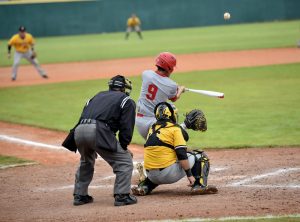
Major League Baseball this past off-season issued a recommendation that all teams lengthen the safety netting at ballparks to increase fan safety. http://m.mlb.com/news/article/159233076/mlb-issues-recommendations-on-netting. Tampa Bay was one of the teams that heeded the new recommendations; “I don’t think we’re taking anything away from the fans who are there,” said Rays vice president of operations/facilities Rick Nafe. “My own personal observation — I have sat in seats in that area that are unprotected by a net, and I tend to enjoy the game a lot more when I know there’s a net in front of me. You know, some of those seats you have to pay attention constantly. That’s just a personal opinion. But I don’t think we’re going to be taking anything away from the fans.” http://m.mlb.com/news/article/159233076/mlb-issues-recommendations-on-netting.
Despite their best intentions, a Rays fan was struck and seriously injured by a baseball fouled by a Rays player that passed through the protective netting and struck her in the face. http://abcnews.go.com/Sports/fan-rays-game-struck-foul-ball-protective-netting/story?id=38442152
Apparently, at the bottom of the seam where the new netting joined the old, triangular gaps were left to provide access to the camera wells. The gaps angled sideways from the field, and the width of the opening facing the field was no more than 6 inches, which made it seemingly unlikely for a ball to get through. http://www.tampabay.com/news/fan-struck-by-foul-ball-is-in-the-hospital-rays-add-netting-to-close-gap/2273551 The Rays have already taken steps to close off those gaps, and the injured fan is recovering from facial injuries that required surgery.
The “Baseball Rule” has long protected baseball teams, as well as hockey teams and other sports from lawsuits for injuries suffered by fans when they are struck by projectiles that leave the field of play or rink. It is a specialized negligence rule that has been in effect since the early twentieth-century. Patrons who chose unprotected seating areas were routinely denied recovery. Such decisions based their decisions on two facts: that the danger of errant balls was common knowledge and that spectators sitting in unscreened seats assumed the risk of injury. See, e.g., Brisson v. Minneapolis Baseball & Athletic Ass’n, 185 Minn. 507, 240 N.W. 903 (1932); Kavafian v. Seattle Baseball Ass’n, 107 Wash. 249, 181 P. 677 (1919). Thus, the rule established a fact-specific standard of care for injuries caused by errant balls at baseball stadiums by accounting for the open and obvious nature of the risk that batted balls pose to fans. Maisonave v. Newark Bears Prof’l Baseball Club, Inc., 185 N.J. 70, 78 (2005).
NEW JERSEY AND THE BASEBALL RULE
In New Jersey and several other states, the operator of a sports venue must provide protected seating “sufficient for those spectators who may be reasonably anticipated to desire protected seats on an ordinary occasion,” and second, the operator must provide protection for spectators in “the most dangerous section” of the stands. The second component of this limited duty may ordinarily be satisfied by the operator providing screened seats behind home plate in baseball and behind the goals in hockey. New Jersey follows a hybrid approach, patrons in the seating areas of a stadium are subject to the limited duty “Baseball Rule”, while those in other areas of the venue are protected by the business invitee rule, which provides that a landowner “owe[s] a duty of reasonable care to guard against any dangerous conditions on his or her property that the owner either knows about or should have discovered.” Maisonave v. Newark Bears Prof’l Baseball Club, Inc., 185 N.J. 70, 85 (2005) Where the operator of a stadium provides screened seats for the members of the public that desire such protection, and the protection fails, is the operator liable for the injuries that result? The answer is determined by the particular facts of the incident. A Florida jury may have to determine whether leaving the triangular gap described in Marc Topkin’s story for the Tampa Bay Times constituted a failure by the Rays to take reasonable care to protect their patrons. If this happened in New Jersey and you were a juror – what would you decide?
Contact CockerillCraigMoore Law
If you have a concern about your legal rights, remedies, and obligations contact the experienced lawyers of Craig Annin & Baxter, LLP.
NON-DISCLOSURE PROVISIONS IN AUTO SALES, LEASING, AND REPAIR CONTRACTS BANNED
NON-DISCLOSURE PROVISIONS IN AUTO SALES, LEASING, AND REPAIR CONTRACTS BANNED A non-disclosure bill, A-4044, passed both houses of the New Jersey Legislature and was signed into law by Governor Christie in a late flurry of legislation before Governor Christie left...
New Jersey Supreme Court Updates Standards For Communicating Rejection of Real Estate Contract After Attorney Review
On April 3, 2017 the New Jersey Supreme Court published its decision in Michael Conley, Jr. v. Mona Guerrero (A-65-15) (076928) dealing with the requirement of notice of rejection under the attorney review provisions of a standard form real estate contract. The...
DO WE REALLY NEED THE PROPOSED NEW “DISTRACTED DRIVING” PROVISION AND IS IT LIKELY TO BE “VOID FOR VAGUENESS”?
A proposed addition to New Jersey’s distracted driving statute, N.J.S.A. 39:4-97.3 would add this language; “[a]n operator of a moving motor vehicle shall not engage in any activity unrelated to the actual operation of a motor vehicle in a manner that interferes with...
ANTHEM OF THE SEAS PASSENGERS PLACED AT RISK BY ROYAL CARIBBEAN
By: Timothy E. Annin Royal Caribbean’s ANTHEM OF THE SEAS encountered hurricane strength winds and high seas resulting in her aborting a Caribbean cruise and returning to New Jersey this week. This is the second sailing in less than five months where a vessel set out...
NEW JERSEY SUPREME COURT CONFIRMS INSURANCE FRAUD LAW DOES NOT REQUIRE THAT THE CARRIER BE INDUCED BY A FALSE STATEMENT TO PAY A DAMAGE CLAIM.
In a unanimous opinion released today the New Jersey Supreme Court held that a violation of the criminal insurance fraud statute, N.J.S.A. 2C:21-4.6(a), does not require proof that a false statement made by the defendant induced the insurance carrier to pay the claim....
NEW JERSEY ASSEMBLY TAKES UP THE SUBJECT OF A PRIVATE CAUSE OF ACTION FOR BAD FAITH IN SETTLEMENT OF INSURANCE CLAIMS
Efforts have been made, since Hurricane Sandy, to broaden the remedies available to consumers who feel they have been wronged by the claim practices of insurance carriers. These efforts have failed in each of their prior versions. A-231 sponsored by Assemblypersons...
WHAT CAN WE LEARN FROM JUDGE BERMAN’S OPINION IN DEFLATEGATE ABOUT ATTACKS ON ARBITRATOR’S RULINGS?
DEFLATEGATE RULING – USDC JUDGE RULES ON NATIONAL FOOTBALL LEAGUE MANAGEMENT COUNCIL V. NATIONAL FOOTBALL LEAGUE PLAYERS ASSOCIATION United States District Court Judge Richard M. Berman ruled today that the arbitrator’s ruling by Commissioner Goodell in National...
INSURANCE FRAUD – NEW JERSEY SUPREME COURT UPDATES CARRIER RESPONSIBILITY
INSURANCE FRAUD – NEW JERSEY SUPREME COURT UPDATES CARRIER RESPONSIBILITY TO INNOCENT THIRD PARTIES WHEN AN APPLICANT FOR A “BASIC” POLICY COMMITS APPLICATION FRAUD New Jersey’s courts have a history of protecting innocent third parties injured in accidents with...
CIVIL INSURANCE FRAUD DEFENDANTS NOW ENTITLED TO TRIAL BY JURY
In Allstate New Jersey Insurance Co. v. Gregorio Lajara (A-70-13) (073511) (Decided July 16, 2015) the New Jersey Supreme Court ruled yesterday that actions by insurance carriers under New Jersey’s Insurance Fraud Prevention Act, N.J.S.A. 17:33A-1 to 30 have now...
RENTING AN OFF-CAMPUS APARTMENT – ISSUES TO CONSIDER
NEW JERSEY LANDLORD-TENANT CIVIL TORTS ATTORNEYS Living in off-campus housing is somewhat of a “right of passage” for many college students. However, with increased freedom also comes responsibility and a number of risks students and parents should take into...